Building a neighborhood network from scratch
Zero to one
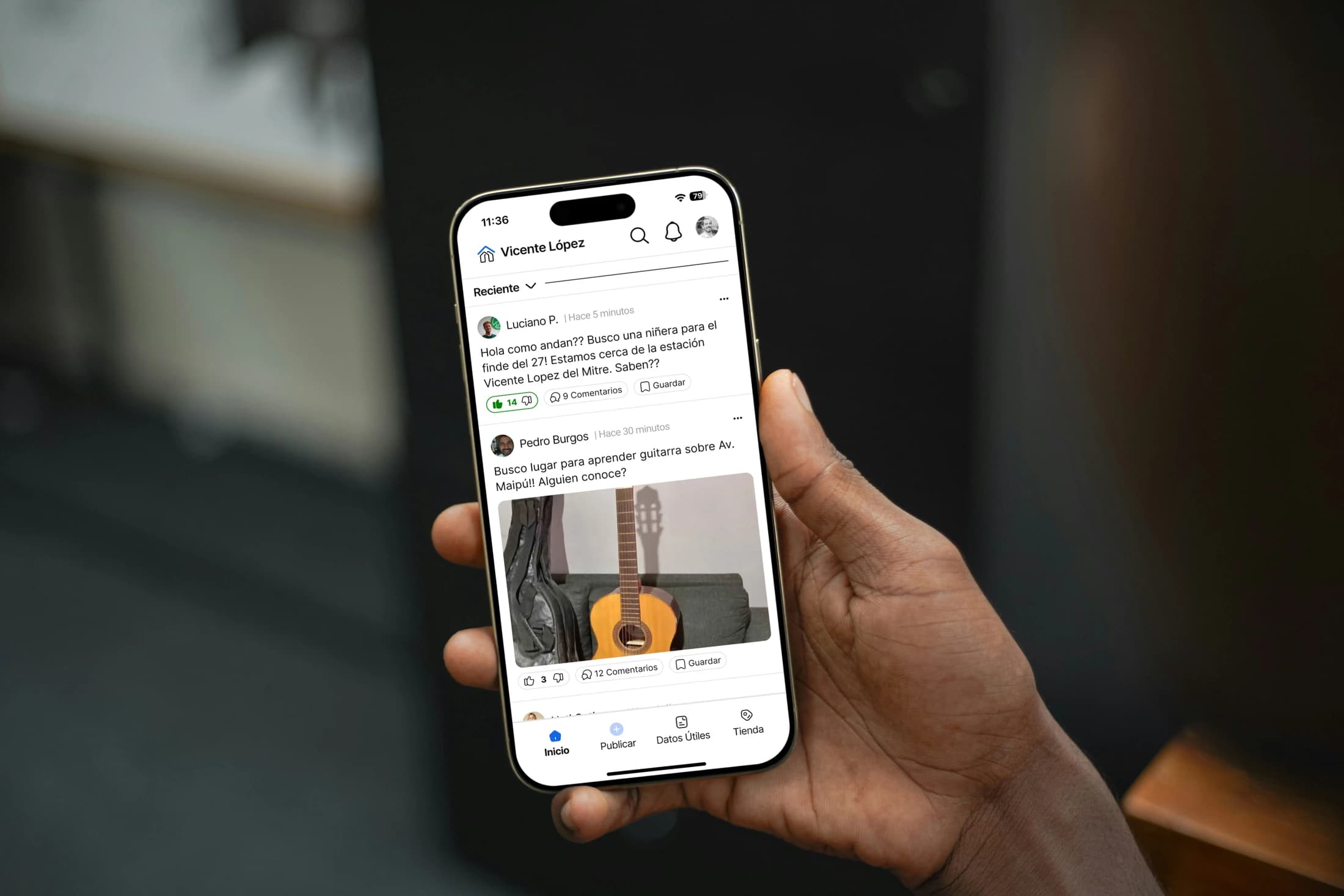
Early design mockup of the neighborhood feed.
- Link:
- tuvecino.com.ar
- Project:
- tuvecino
- Role:
- Founder & Product Designer
- Year:
- 2025
- Launch:
- January 2026
I started tuvecino to help people reconnect with the neighbors around them. The idea grew out of my own experience of neighborhood life in Olivos, where trust and connection came from everyday interactions. The product brings that idea into a digital space for local conversations, recommendations, and useful information.
I drove the product, research, design, and launch, and contributed to the frontend. I worked with Federico Terpin, the main developer on the project, who handled the backend.
The problem
Growing up, my neighbors were part of my daily life. They looked after me, shared stories, and made the neighborhood feel familiar. Years later, I kept coming back to how easily we can live surrounded by people we barely know.
Tuvecino began with a simple ambition: make neighborhoods feel like neighborhoods again. Give people a way to ask a question, share something useful, or find help from someone nearby.
Research and decisions
The starting point was a personal observation about community. The product question was how to turn that feeling into something useful in everyday life.
The neighborhood became the organizing unit of the experience. During registration, an address connects a person to a supported neighborhood. If their area is not available yet, they can join a waiting list. That makes location part of joining the community, rather than just another filter on a general feed.
After launch, we were getting only a small number of registrations in each neighborhood. That exposed the central challenge: people needed other neighbors to be active for tuvecino to feel useful. Early feedback asked for more information about activities happening nearby.
I studied network effects and reconsidered how we could bring people in. Buildings offered a more concentrated starting point: a group of people who already shared a location and could join together. We tested and launched that approach, with the aim of bringing groups from the same neighborhood into the product together.
Separate registrations
Small numbers of people joining across different neighborhoods.
Building-focused onboarding
An existing group joining together within the same neighborhood.
The solution
The core experience is a neighborhood feed. People can publish a message, add images, respond to a conversation, and search for relevant posts. Recent and popular views offer two ways into the activity around them.
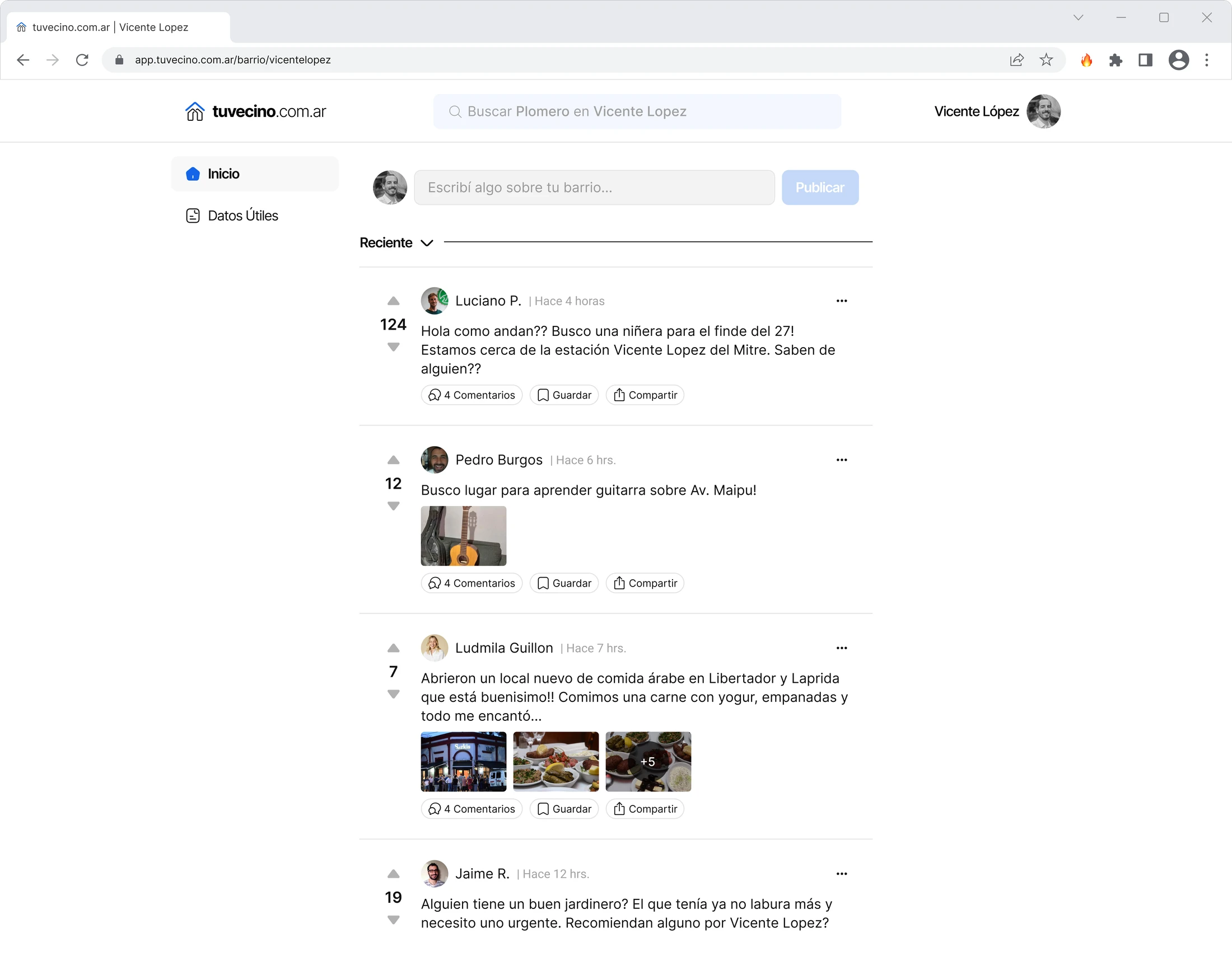
Early desktop feed design. Posts and activity counts are demonstration content.
Useful local information has its own place in the product. A map and categorized directory bring neighborhood places and contact details together, alongside the conversations in the feed.
The product also defines who can participate. A shared post can be read outside its neighborhood, while commenting and voting are limited to its author and members of that neighborhood. Reporting and hiding controls give people a way to respond to content they do not want in their feed.
Outcomes and learnings
Tuvecino launched in January 2026, covering three neighborhoods and reaching around 80 users. It is still live and working, and people can register and access the platform. The project is currently on standby, with no active marketing.
The launch made a gap clear: getting people to register was only part of the challenge. With a small number of users spread across neighborhoods, there was not enough participation in each area to make the experience consistently valuable. Feedback asking for more local activities reinforced the need for a useful, active community nearby.
My biggest learning was to think about growth at the level where people experience the product. For tuvecino, that meant enough neighbors participating in the same place. Focusing on buildings became a way to approach that problem: bring an existing group into one neighborhood together, then build from there.
We tested and launched the building-focused approach, but did not promote it. The product remains available while we have marketing on hold.